The Fundamental Clustering Problems Suite (FCPS) summaries 54 state-of-the-art clustering algorithms, common cluster challenges and estimations of the number of clusters as well as the testing for cluster tendency.

Overview

CRAN_Status_Badge DOI CRAN RStudio mirror downloads CRAN RStudio mirror downloads

FCPS

Fundamental Clustering Problems Suite

The package provides over sixty state-of-the-art clustering algorithms for unsupervised machine learning published in [Thrun and Stier 2021].

Table of contents

  1. Description
  2. Installation
  3. Tutorial Examples
  4. Manual
  5. Use cases
  6. Additional information
  7. References

Description

The Fundamental Clustering Problems Suite (FCPS) summaries over sixty state-of-the-art clustering algorithms available in R language. An important advantage is that the input and output of clustering algorithms is simplified and consistent in order to enable users a swift execution of cluster analysis. By combining mirrored-density plots (MD plots) with statistical testing FCPS provides a tool to investigate the cluster tendency quickly prior to the cluster analysis itself [Thrun 2020]. Common clustering challenges can be generated with arbitrary sample size [Thrun and Ultsch 2020a]. Additionally, FCPS sums 26 indicators with the goal to estimate the number of clusters up and provides an appropriate implementation of the clustering accuracy for more than two clusters [Thrun and Ultsch 2021]. A subset of methods was used in a benchmarking of algorithms published in [Thrun and Ultsch 2020b].

Installation

Installation using CRAN

Install automatically with all dependencies via

install.packages("FCPS",dependencies = T)

# Optionally, for the automatic installation
# of all suggested packages:
Suggested=c("kernlab", "cclust", "dbscan", "kohonen",
            "MCL", "ADPclust", "cluster", "DatabionicSwarm",
            "orclus", "subspace", "flexclust", "ABCanalysis",
            "apcluster", "pracma", "EMCluster", "pdfCluster", "parallelDist",
            "plotly", "ProjectionBasedClustering", "GeneralizedUmatrix",
            "mstknnclust", "densityClust", "parallel", "energy", "R.utils",
            "tclust", "Spectrum", "genie", "protoclust", "fastcluster", 
			"clusterability", "signal", "reshape2", "PPCI", "clustrd", "smacof",
			"rgl", "prclust", "dendextend",
            "moments", "prabclus", "VarSelLCM", "sparcl", "mixtools",
            "HDclassif", "clustvarsel", "knitr", "rmarkdown")

for(i in 1:length(Suggested)) {
  if (!requireNamespace(Suggested[i], quietly = TRUE)) {
    message(paste("Installing the package", Suggested[i]))
    install.packages(Suggested[i], dependencies = T)
  }
}

Installation using Github

Please note, that dependecies have to be installed manually.

remotes::install_github("Mthrun/FCPS")

Installation using R Studio

Please note, that dependecies have to be installed manually.

Tools -> Install Packages -> Repository (CRAN) -> FCPS

Tutorial Examples

The tutorial with several examples can be found on in the vignette on CRAN:

https://cran.r-project.org/web/packages/FCPS/vignettes/FCPS.html

Manual

The full manual for users or developers is available here: https://cran.r-project.org/web/packages/FCPS/FCPS.pdf

Use Cases

Cluster Analysis of High-dimensional Data

The package FCPS provides a clear and consistent access to state-of-the-art clustering algorithms:

library(FCPS)
data("Leukemia")
Data=Leukemia$Distance
Classification=Leukemia$Cls
ClusterNo=6
CA=ADPclustering(Leukemia$DistanceMatrix,ClusterNo)
Cls=ClusterRenameDescendingSize(CA$Cls)
ClusterPlotMDS(Data,Cls,main =Leukemia’,Plotter3D =plotly’)
ClusterAccuracy(Cls,Classification)
[1] 0.9963899

Generating Typical Challenges for Clustering Algorithms

Several clustering challenge can be generated with an arbitrary sample size:

set.seed(600)
library(FCPS)
DataList=ClusterChallenge("Chainlink", SampleSize = 750,
PlotIt=TRUE)
Data=DataList$Chainlink
Cls=DataList$Cls
> ClusterCount(Cls)
$CountPerCluster
$NumberOfClusters
$ClusterPercentages
[1] 377 373
[1] 2
[1] 50.26667 49.73333

Cluster-Tendency

For many applications, it is crucial to decide if a dataset possesses cluster structures:

library(FCPS)
set.seed(600)
DataList=ClusterChallenge("Chainlink",SampleSize = 750)
Data=DataList$Chainlink
Cls=DataList$Cls
library(ggplot2)
ClusterabilityMDplot(Data)+theme_bw()

Estimation of Number of Clusters

The “FCPS” package provides up to 26 indicators to determine the number of clusters:

library(FCPS)
set.seed(135)
DataList=ClusterChallenge("Chainlink",SampleSize = 900)
Data=DataList$Chainlink
Cls=DataList$Cls
Tree=HierarchicalClustering(Data,0,"SingleL")[[3]]
ClusterDendrogram(Tree,4,main="Single Linkage")
MaximumNumber=7
clsm <- matrix(data = 0, nrow = dim(Data)[1], ncol = MaximumNumber)
for (i in 2:(MaximumNumber+1)) {
clsm[,i-1] <- cutree(Tree,i)
}
out=ClusterNoEstimation(Data, ClsMatrix = clsm,
MaxClusterNo = MaximumNumber, PlotIt = TRUE)

Additional information

Authors website http://www.deepbionics.org/
License GPL-3
Dependencies R (>= 3.5.0)
Bug reports https://github.com/Mthrun/FCPS/issues

References

  1. [Thrun/Stier, 2021] Thrun, M. C., & Stier, Q.: Fundamental Clustering Algorithms Suite SoftwareX, Vol. 13(C), pp. 100642. doi 10.1016/j.softx.2020.100642, 2021.
  2. [Thrun, 2020] Thrun, M. C.: Improving the Sensitivity of Statistical Testing for Clusterability with Mirrored-Density Plot, in Archambault, D., Nabney, I. & Peltonen, J. (eds.), Machine Learning Methods in Visualisation for Big Data, DOI 10.2312/mlvis.20201102, The Eurographics Association, Norrköping , Sweden, May, 2020.
  3. [Thrun/Ultsch, 2020a] Thrun, M. C., & Ultsch, A.: Clustering Benchmark Datasets Exploiting the Fundamental Clustering Problems, Data in Brief,Vol. 30(C), pp. 105501, DOI 10.1016/j.dib.2020.105501 , 2020.
  4. [Thrun/Ultsch, 2021] Thrun, M. C., and Ultsch, A.: Swarm Intelligence for Self-Organized Clustering, Artificial Intelligence, Vol. 290, pp. 103237, \doi{10.1016/j.artint.2020.103237}, 2021.
  5. [Thrun/Ultsch, 2020b] Thrun, M. C., & Ultsch, A. : Using Projection based Clustering to Find Distance and Density based Clusters in High-Dimensional Data, Journal of Classification, \doi{10.1007/s00357-020-09373-2}, Springer, 2020.
You might also like...
Abstractive opinion summarization system (SelSum) and the largest dataset of Amazon product summaries (AmaSum). EMNLP 2021 conference paper.

Learning Opinion Summarizers by Selecting Informative Reviews This repository contains the codebase and the dataset for the corresponding EMNLP 2021

On Generating Extended Summaries of Long Documents

ExtendedSumm This repository contains the implementation details and datasets used in On Generating Extended Summaries of Long Documents paper at the

Automatic voice-synthetised summaries of latest research papers on arXiv

PaperWhisperer PaperWhisperer is a Python application that keeps you up-to-date with research papers. How? It retrieves the latest articles from arXiv

Code for ACL 21: Generating Query Focused Summaries from Query-Free Resources

marge This repository releases the code for Generating Query Focused Summaries from Query-Free Resources. Please cite the following paper [bib] if you

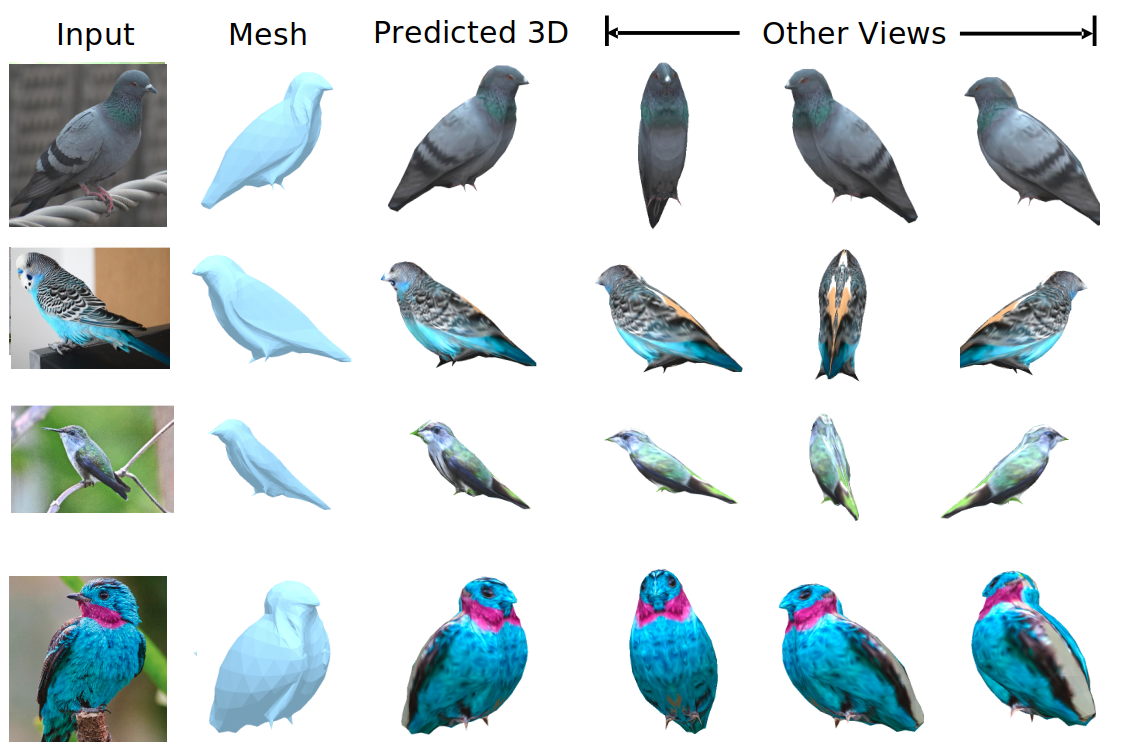
We evaluate our method on different datasets (including ShapeNet, CUB-200-2011, and Pascal3D+) and achieve state-of-the-art results, outperforming all the other supervised and unsupervised methods and 3D representations, all in terms of performance, accuracy, and training time. This is the unofficial code of  Deep Dual-resolution Networks for Real-time and Accurate Semantic Segmentation of Road Scenes. which achieve state-of-the-art trade-off between accuracy and speed on cityscapes and camvid, without using inference acceleration and extra data Propose a principled and practically effective framework for unsupervised accuracy estimation and error detection tasks with theoretical analysis and state-of-the-art performance.
Propose a principled and practically effective framework for unsupervised accuracy estimation and error detection tasks with theoretical analysis and state-of-the-art performance.

Detecting Errors and Estimating Accuracy on Unlabeled Data with Self-training Ensembles This project is for the paper: Detecting Errors and Estimating

This repository is related to an Arabic tutorial, within the tutorial we discuss the common data structure and algorithms and their worst and best case for each, then implement the code using Python.

Data Structure and Algorithms with Python This repository is related to the Arabic tutorial here, within the tutorial we discuss the common data struc

tsai is an open-source deep learning package built on top of Pytorch & fastai focused on state-of-the-art techniques for time series classification, regression and forecasting.

Time series Timeseries Deep Learning Pytorch fastai - State-of-the-art Deep Learning with Time Series and Sequences in Pytorch / fastai

Comments
  • Mo gclustering2 model based clustering

    Mo gclustering2 model based clustering

    IMPORTANT UPDATE: MoGclustering renamed to ModelBasedClustering MoG Clustering is now defined es Mixture of Gaussians based on EM This is a change contrary to the book [Thrun, 2018]! Additionally density based clustering methods added.

    opened by Mthrun 1
  • Missing function

    Missing function

    `

    install.packages("FCPS") Installing package into ‘/home/roc/R/x86_64-pc-linux-gnu-library/4.0’ (as ‘lib’ is unspecified) trying URL 'https://cloud.r-project.org/src/contrib/FCPS_1.2.7.tar.gz' Content type 'application/x-gzip' length 2859121 bytes (2.7 MB) ================================================== downloaded 2.7 MB

    • installing source package ‘FCPS’ ... ** package ‘FCPS’ successfully unpacked and MD5 sums checked ** using staged installation ** R ** data *** moving datasets to lazyload DB ** inst ** byte-compile and prepare package for lazy loading ** help *** installing help indices ** building package indices ** installing vignettes ** testing if installed package can be loaded from temporary location ** testing if installed package can be loaded from final location ** testing if installed package keeps a record of temporary installation path
    • DONE (FCPS)

    The downloaded source packages are in ‘/tmp/Rtmpzb0Mdh/downloaded_packages’

    data('Hepta')

    out=HierarchicalClusterDists(as.matrix(dist(Hepta$Data)),ClusterNo=7) Error in HierarchicalClusterDists(as.matrix(dist(Hepta$Data)), ClusterNo = 7) : could not find function "HierarchicalClusterDists" `

    opened by technocrat 3
Releases(1.2.3)
  • 1.2.3(Jun 23, 2020)

    Many conventional clustering algorithms are provided in this package with consistent input and output, which enables the user to try out algorithms swiftly. Additionally, 26 statistical approaches for the estimation of the number of clusters as well as the the mirrored density plot (MD-plot) of clusterability are implemented. Moreover, the fundamental clustering problems suite (FCPS) offers a variety of clustering challenges any algorithm should handle when facing real world data, see Thrun, M.C., Ultsch A.: "Clustering Benchmark Datasets Exploiting the Fundamental Clustering Problems" (2020), Data in Brief, DOI:10.1016/j.dib.2020.105501.

    Source code(tar.gz)
    Source code(zip)
Owner
Dr. rer. nat. Michael C. Thrun, promovierte 2017 an der Philipps-Universität Marburg am Lehrstuhl für Neuroinformatik unter Prof. Dr. rer. nat. Alfred Ultsch.
AsymmetricGAN - Dual Generator Generative Adversarial Networks for Multi-Domain Image-to-Image Translation

AsymmetricGAN for Image-to-Image Translation AsymmetricGAN Framework for Multi-Domain Image-to-Image Translation AsymmetricGAN Framework for Hand Gest

Hao Tang 42 Jan 15, 2022
Simple STAC Catalogs discovery tool.

STAC Catalog Discovery Simple STAC discovery tool. Just paste the STAC Catalog link and press Enter. Details STAC Discovery tool enables discovering d

Mykola Kozyr 21 Oct 19, 2022
D-NeRF: Neural Radiance Fields for Dynamic Scenes

D-NeRF: Neural Radiance Fields for Dynamic Scenes [Project] [Paper] D-NeRF is a method for synthesizing novel views, at an arbitrary point in time, of

Albert Pumarola 291 Jan 02, 2023
An experimental technique for efficiently exploring neural architectures.

SMASH: One-Shot Model Architecture Search through HyperNetworks An experimental technique for efficiently exploring neural architectures. This reposit

Andy Brock 478 Aug 04, 2022
LF-YOLO (Lighter and Faster YOLO) is used to detect defect of X-ray weld image.

This project is based on ultralytics/yolov3. LF-YOLO (Lighter and Faster YOLO) is used to detect defect of X-ray weld image. The related paper is avai

26 Dec 13, 2022
PyTorch code for our paper "Image Super-Resolution with Non-Local Sparse Attention" (CVPR2021).

Image Super-Resolution with Non-Local Sparse Attention This repository is for NLSN introduced in the following paper "Image Super-Resolution with Non-

143 Dec 28, 2022
Categorical Depth Distribution Network for Monocular 3D Object Detection

CaDDN CaDDN is a monocular-based 3D object detection method. This repository is based off of [OpenPCDet]. Categorical Depth Distribution Network for M

Toronto Robotics and AI Laboratory 289 Jan 05, 2023
Beyond a Gaussian Denoiser: Residual Learning of Deep CNN for Image Denoising

Beyond a Gaussian Denoiser: Residual Learning of Deep CNN for Image Denoising

Kai Zhang 1.2k Dec 29, 2022
Create UIs for prototyping your machine learning model in 3 minutes

Note: We just launched Hosted, where anyone can upload their interface for permanent hosting. Check it out! Welcome to Gradio Quickly create customiza

Gradio 11.7k Jan 07, 2023
Code for Transformer Hawkes Process, ICML 2020.

Transformer Hawkes Process Source code for Transformer Hawkes Process (ICML 2020). Run the code Dependencies Python 3.7. Anaconda contains all the req

Simiao Zuo 111 Dec 26, 2022
Mind the Trade-off: Debiasing NLU Models without Degrading the In-distribution Performance

Models for natural language understanding (NLU) tasks often rely on the idiosyncratic biases of the dataset, which make them brittle against test cases outside the training distribution.

Ubiquitous Knowledge Processing Lab 22 Jan 02, 2023
验证码识别 深度学习 tensorflow 神经网络

captcha_tf2 验证码识别 深度学习 tensorflow 神经网络 使用卷积神经网络,对字符,数字类型验证码进行识别,tensorflow使用2.0以上 目前项目还在更新中,诸多bug,欢迎提出issue和PR, 希望和你一起共同完善项目。 实例demo 训练过程 优化器选择: Adam

5 Apr 28, 2022
Self-Supervised Multi-Frame Monocular Scene Flow (CVPR 2021)

Self-Supervised Multi-Frame Monocular Scene Flow 3D visualization of estimated depth and scene flow (overlayed with input image) from temporally conse

Visual Inference Lab @TU Darmstadt 85 Dec 22, 2022
MassiveSumm: a very large-scale, very multilingual, news summarisation dataset

MassiveSumm: a very large-scale, very multilingual, news summarisation dataset This repository contains links to data and code to fetch and reproduce

Daniel Varab 19 Dec 16, 2022
Art Project "Schrödinger's Game of Life"

Repo of the project "Team Creative Quantum AI: Schrödinger's Game of Life" Installation new conda env: conda create --name qcml python=3.8 conda activ

ℍ◮ℕℕ◭ℍ ℝ∈ᛔ∈ℝ 2 Sep 15, 2022
Official PyTorch implementation of "Improving Face Recognition with Large AgeGaps by Learning to Distinguish Children" (BMVC 2021)

Inter-Prototype (BMVC 2021): Official Project Webpage This repository provides the official PyTorch implementation of the following paper: Improving F

Jungsoo Lee 16 Jun 30, 2022
ViewFormer: NeRF-free Neural Rendering from Few Images Using Transformers

ViewFormer: NeRF-free Neural Rendering from Few Images Using Transformers Official implementation of ViewFormer. ViewFormer is a NeRF-free neural rend

Jonáš Kulhánek 169 Dec 30, 2022
Code for the paper One Thing One Click: A Self-Training Approach for Weakly Supervised 3D Semantic Segmentation, CVPR 2021.

One Thing One Click One Thing One Click: A Self-Training Approach for Weakly Supervised 3D Semantic Segmentation (CVPR2021) Code for the paper One Thi

44 Dec 12, 2022
From the basics to slightly more interesting applications of Tensorflow

TensorFlow Tutorials You can find python source code under the python directory, and associated notebooks under notebooks. Source code Description 1 b

Parag K Mital 5.6k Jan 09, 2023
Repository for the paper titled: "When is BERT Multilingual? Isolating Crucial Ingredients for Cross-lingual Transfer"

When is BERT Multilingual? Isolating Crucial Ingredients for Cross-lingual Transfer This repository contains code for our paper titled "When is BERT M

Princeton Natural Language Processing 9 Dec 23, 2022