Supporting code for "Autoregressive neural-network wavefunctions for ab initio quantum chemistry".

Overview

naqs-for-quantum-chemistry


Generic badge MIT License


This repository contains the codebase developed for the paper Autoregressive neural-network wavefunctions for ab initio quantum chemistry.


(a) Architecture of a neural autoregressive quantum state (NAQS) (b) Energy surface of N2

TL;DR

Certain parts of the notebooks relating to generating molecular data are currently not working due to updates to the underlying OpenFermion and Psi4 packages (I'll fix it!) - however the experimental results of NAQS can still be reproduced as we also provide pre-generated data in this repository.

If you don't care for now, and you just want to see it running, here are two links to notebooks that will set-up and run on Colab. Just note that Colab will not have enough memory to run experiments on the largest molecules we considered.

  • run_naqs.ipynb Open In Colab: Run individual experiments or batches of experiments, including those to recreate published results.

  • generate_molecular_data_and_baselines.ipynb Open In Colab:

    1. Create the [molecule].hdf5 and [molecule]_qubit_hamiltonian.pkl files required (these are provided for molecules used in the paper in the molecules directory.)
    2. Solve these molecules using various canconical QC methods using Psi4.

Overview

Quantum chemistry with neural networks

A grand challenge of ab-inito quantum chemistry (QC) is to solve the many-body Schrodinger equation describing interaction of heavy nuclei and orbiting electrons. Unfortunatley, this is an extremely (read, NP) hard problem, and so a significant amout of research effort has, and continues, to be directed towards numerical methods in QC. Typically, these methods work by optimising the wavefunction in a basis set of "Slater determinants". (In practice these are anti-symetterised tensor products of single-electron orbitals, but for our purposes let's not worry about the details.) Typically, the number of Slater determinants - and so the complexity of optimisation - grows exponentially with the system size, but recently machine learning (ML) has emerged as a possible tool with which to tackle this seemingly intractable scaling issue.

Translation/disclaimer: we can use ML and it has displayed some promising properties, but right now the SOTA results still belong to the established numerical methods (e.g. coupled-cluster) in practical settings.

Project summary

We follow the approach proposed by Choo et al. to map the exponentially complex system of interacting fermions to an equivilent (and still exponentially large) system of interacting qubits (see their or our paper for details). The advantage being that we can then apply neural network quantum states (NNQS) originally developed for condensed matter physics (CMP) (with distinguishable interacting particles) to the electron structure calculations (with indistinguishable electrons and fermionic anti-symettries).

This project proposes that simply applying techniques from CMP to QC will inevitably fail to take advantage of our significant a priori knowledge of molecular systems. Moreover, the stochastic optimisation of NNQS relies on repeatedly sampling the wavefunction, which can be prohibitively expensive. This project is a sandbox for trialling different NNQS, in particular an ansatz based on autoregressive neural networks that we present in the paper. The major benefits of our approach are that it:

  1. allows for highly efficient sampling, especially of the highly asymmetric wavefunction typical found in QC,
  2. allows for physical priors - such as conservation of electron number, overall spin and possible symettries - to be embedded into the network without sacrificing expressibility.

Getting started

In this repo

notebooks
  • run_naqs.ipynb Open In Colab: Run individual experiments or batches of experiments, including those to recreate published results.

  • generate_molecular_data_and_baselines.ipynb Open In Colab:

    1. Create the [molecule].hdf5 and [molecule]_qubit_hamiltonian.pkl files required (these are provided for molecules used in the paper in the molecules directory.)
    2. Solve these molecules using various canconical QC methods using Psi4.
experiments

Experimental scripts, including those to reproduced published results, for NAQS and Psi4.

molecules

The molecular data required to reproduce published results.

src / src_cpp

Python and cython source code for the main codebase and fast calculations, respectively.

Running experiments

Further details are provided in the run_naqs.ipynb notebook, however the published experiments can be run using the provided batch scripts.

>>> experiments/bash/naqs/batch_train.sh 0 LiH

Here, 0 is the GPU number to use (if one is available, otherwise the CPU will be used by default) and LiH can be replaced by any folder in the molecules directory. Similarly, the experimental ablations can be run using the corresponding bash scripts.

>>> experiments/bash/naqs/batch_train_no_amp_sym.sh 0 LiH
>>> experiments/bash/naqs/batch_train_no_mask.sh 0 LiH
>>> experiments/bash/naqs/batch_train_full_mask.sh 0 LiH

Requirements

The underlying neural networks require PyTorch. The molecular systems are typically handled by OpenFermion with the backend calculations and baselines requiring and Psi4. Note that this code expects OpenFermion 0.11.0 and will need refactoring to work with newer versions. Otherwise, all other required packages - numpy, matplotlib, seaborn if you want pretty plots etc - are standard. However, to be concrete, the linked Colab notebooks will provide an environment in which the code can be run.

Reference

If you find this project or the associated paper useful, it can be cited as below.

@article{barrett2021autoregressive,
  title={Autoregressive neural-network wavefunctions for ab initio quantum chemistry},
  author={Barrett, Thomas D and Malyshev, Aleksei and Lvovsky, AI},
  journal={arXiv preprint arXiv:2109.12606},
  year={2021}
}
You might also like...
TensorFlow code for the neural network presented in the paper:
TensorFlow code for the neural network presented in the paper: "Structural Language Models of Code" (ICML'2020)

SLM: Structural Language Models of Code This is an official implementation of the model described in: "Structural Language Models of Code" [PDF] To ap

Inference code for "StylePeople: A Generative Model of Fullbody Human Avatars" paper. This code is for the part of the paper describing video-based avatars.

NeuralTextures This is repository with inference code for paper "StylePeople: A Generative Model of Fullbody Human Avatars" (CVPR21). This code is for

A code generator from ONNX to PyTorch code

onnx-pytorch Generating pytorch code from ONNX. Currently support onnx==1.9.0 and torch==1.8.1. Installation From PyPI pip install onnx-pytorch From

This is the code for our KILT leaderboard submission to the T-REx and zsRE tasks. It includes code for training a DPR model then continuing training with RAG.

KGI (Knowledge Graph Induction) for slot filling This is the code for our KILT leaderboard submission to the T-REx and zsRE tasks. It includes code fo

Convert Python 3 code to CUDA code.

Py2CUDA Convert python code to CUDA. Usage To convert a python file say named py_file.py to CUDA, run python generate_cuda.py --file py_file.py --arch

Empirical Study of Transformers for Source Code & A Simple Approach for Handling Out-of-Vocabulary Identifiers in Deep Learning for Source Code

Transformers for variable misuse, function naming and code completion tasks The official PyTorch implementation of: Empirical Study of Transformers fo

Reference implementation of code generation projects from Facebook AI Research. General toolkit to apply machine learning to code, from dataset creation to model training and evaluation. Comes with pretrained models.

This repository is a toolkit to do machine learning for programming languages. It implements tokenization, dataset preprocessing, model training and m

Code for the prototype tool in our paper "CoProtector: Protect Open-Source Code against Unauthorized Training Usage with Data Poisoning".

CoProtector Code for the prototype tool in our paper "CoProtector: Protect Open-Source Code against Unauthorized Training Usage with Data Poisoning".

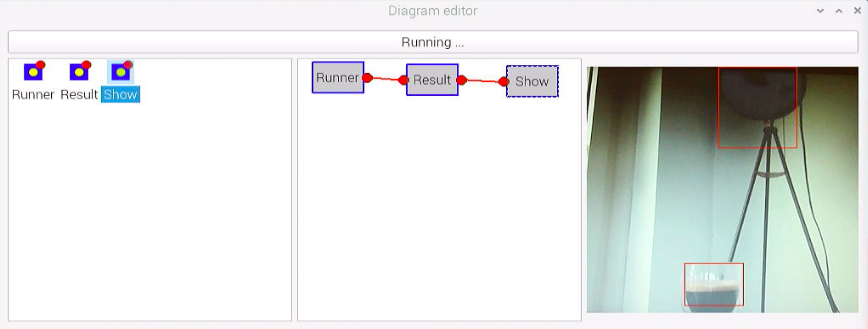
Low-code/No-code approach for deep learning inference on devices

EzEdgeAI A concept project that uses a low-code/no-code approach to implement deep learning inference on devices. It provides a componentized framewor

Comments
  • pip installation

    pip installation

    Great code. It runs very smoothly and clearly outperforms the results in Choo et al. Would you consider re-engineering the code slightly to allow for a pipy installation?

    opened by kastoryano 0
Releases(v1.0.0)
Owner
Tom Barrett
Research Scientist @ InstaDeep, formerly postdoctoral researcher @ Oxford. RL, GNN's, quantum physics, optical computing and the intersection thereof.
Tom Barrett
Proto-RL: Reinforcement Learning with Prototypical Representations

Proto-RL: Reinforcement Learning with Prototypical Representations This is a PyTorch implementation of Proto-RL from Reinforcement Learning with Proto

Denis Yarats 74 Dec 06, 2022
hipCaffe: the HIP port of Caffe

Caffe Caffe is a deep learning framework made with expression, speed, and modularity in mind. It is developed by the Berkeley Vision and Learning Cent

ROCm Software Platform 126 Dec 05, 2022
Cross-Image Region Mining with Region Prototypical Network for Weakly Supervised Segmentation

Cross-Image Region Mining with Region Prototypical Network for Weakly Supervised Segmentation The code of: Cross-Image Region Mining with Region Proto

LiuWeide 16 Nov 26, 2022
Code release for "Detecting Twenty-thousand Classes using Image-level Supervision".

Detecting Twenty-thousand Classes using Image-level Supervision Detic: A Detector with image classes that can use image-level labels to easily train d

Meta Research 1.3k Jan 04, 2023
Optimizaciones incrementales al problema N-Body con el fin de evaluar y comparar las prestaciones de los traductores de Python en el ámbito de HPC.

Python HPC Optimizaciones incrementales de N-Body (all-pairs) con el fin de evaluar y comparar las prestaciones de los traductores de Python en el ámb

Andrés Milla 12 Aug 04, 2022
SysWhispers Shellcode Loader

Shhhloader Shhhloader is a SysWhispers Shellcode Loader that is currently a Work in Progress. It takes raw shellcode as input and compiles a C++ stub

icyguider 630 Jan 03, 2023
x-transformers-paddle 2.x version

x-transformers-paddle x-transformers-paddle 2.x version paddle 2.x版本 https://github.com/lucidrains/x-transformers 。 requirements paddlepaddle-gpu==2.2

yujun 7 Dec 08, 2022
CoReNet is a technique for joint multi-object 3D reconstruction from a single RGB image.

CoReNet CoReNet is a technique for joint multi-object 3D reconstruction from a single RGB image. It produces coherent reconstructions, where all objec

Google Research 80 Dec 25, 2022
This is the pytorch implementation for the paper: Generalizable Mixed-Precision Quantization via Attribution Rank Preservation, which is accepted to ICCV2021.

GMPQ: Generalizable Mixed-Precision Quantization via Attribution Rank Preservation This is the pytorch implementation for the paper: Generalizable Mix

18 Sep 02, 2022
CDTrans: Cross-domain Transformer for Unsupervised Domain Adaptation

[ICCV2021] TransReID: Transformer-based Object Re-Identification [pdf] The official repository for TransReID: Transformer-based Object Re-Identificati

DamoCV 569 Dec 30, 2022
High frequency AI based algorithmic trading module.

Flow Flow is a high frequency algorithmic trading module that uses machine learning to self regulate and self optimize for maximum return. The current

59 Dec 14, 2022
Repo for CVPR2021 paper "QPIC: Query-Based Pairwise Human-Object Interaction Detection with Image-Wide Contextual Information"

QPIC: Query-Based Pairwise Human-Object Interaction Detection with Image-Wide Contextual Information by Masato Tamura, Hiroki Ohashi, and Tomoaki Yosh

105 Dec 23, 2022
Unofficial PyTorch implementation of Google AI's VoiceFilter system

VoiceFilter Note from Seung-won (2020.10.25) Hi everyone! It's Seung-won from MINDs Lab, Inc. It's been a long time since I've released this open-sour

MINDs Lab 883 Jan 07, 2023
CTC segmentation python package

CTC segmentation CTC segmentation can be used to find utterances alignments within large audio files. This repository contains the ctc-segmentation py

Ludwig Kürzinger 217 Jan 04, 2023
project page for VinVL

VinVL: Revisiting Visual Representations in Vision-Language Models Updates 02/28/2021: Project page built. Introduction This repository is the project

308 Jan 09, 2023
Code for the submitted paper Surrogate-based cross-correlation for particle image velocimetry

Surrogate-based cross-correlation (SBCC) This repository contains code for the submitted paper Surrogate-based cross-correlation for particle image ve

5 Jun 30, 2022
A self-supervised 3D representation learning framework named viewpoint bottleneck.

Pointly-supervised 3D Scene Parsing with Viewpoint Bottleneck Paper Created by Liyi Luo, Beiwen Tian, Hao Zhao and Guyue Zhou from Institute for AI In

63 Aug 11, 2022
Official codes: Self-Supervised Learning by Estimating Twin Class Distribution

TWIST: Self-Supervised Learning by Estimating Twin Class Distributions Codes and pretrained models for TWIST: @article{wang2021self, title={Self-Sup

Bytedance Inc. 85 Dec 15, 2022
Codebase for Diffusion Models Beat GANS on Image Synthesis.

Codebase for Diffusion Models Beat GANS on Image Synthesis.

Katherine Crowson 128 Dec 02, 2022
Search Youtube Video and Get Video info

PyYouTube Get Video Data from YouTube link Installation pip install PyYouTube How to use it ? Get Videos Data from pyyoutube import Data yt = Data("ht

lokaman chendekar 35 Nov 25, 2022